other
  • From the Fields to the International Table: Chinese Greenhouses and Fresh Produce Accelerate Their Global Expansion
    From the Fields to the International Table: Chinese Greenhouses and Fresh Produce Accelerate Their Global Expansion
    From the Fields to the International Table: Chinese Greenhouses and Fresh Produce Accelerate Their Global Expansion December 23, 2025 – As winter arrives, modern agricultural industrial parks across China are bustling with activity. From colorful bell peppers in Xinjiang to intelligent greenhouse technology in Shandong, from fresh-cut flowers in Yunnan to garlic in Guizhou, China's greenhouse industry is undergoing a profound global transformation. This is not only a transnational journey for agricultural products but also a process of Chinese modern agricultural technology and standards going global. Fresh Fruits and Vegetables Go Global: Central and Southeast Asia Become Major Markets Recently, in Moyu County, Hotan Prefecture, Xinjiang, two trucks loaded with purple "Lao Wang Long Eggplant" set off, honking their horns, and headed to Kazakhstan via the Horgos port. These off-season vegetables, grown in greenhouses in the Gobi Desert, are in high demand in the Central Asian market due to their color and taste. This is just a microcosm of Xinjiang's agricultural product exports. ● In Jinghe County, the screw peppers, cucumbers, and bell peppers grown in local smart greenhouses have attracted the attention of Russian and Kazakhstani buyers. Through the establishment of order-based planting models and strict constant-temperature packaging standards, these vegetables are being shipped to Russia at a rate of one truck every three days. ● In Turpan, through the transformation of multi-span greenhouse technology, seedless white grapes have achieved winter growth, and 40 tons of sweet fruit were recently successfully sold to Vietnam, starting a "sweetening" journey in the Southeast Asian market. Gansu Zhuanglang and Xinjiang Bachu: Specialty Bell Peppers Light Up the "Belt and Road" Initiative In Huoli Village, Wanquan Town, Zhuanglang County, Gansu Province, the bell peppers in the greenhouses are a vibrant mix of red and green. This is not only the first export of Zhuanglang vegetables but also a leap in quality. Relying on order-based cooperation with Syngenta Group, Zhuanglang bell peppers are strictly planted according to export standards, with vitamin content and sweetness meeting the requirements, and the export price is twice as high as the domestic market price. Xinjiang Bachu County is also targeting the international market. The local area has introduced advanced agricultural companies and built 80 greenhouses specifically for planting high-quality bell pepper varieties such as "Da Mandi" and "Huang Taiji". These bell peppers are expected to be available in February 2026, primarily targeting the Russian market, with an estimated export price of 10 yuan per kilogram (FOB), simultaneously boosting employment and income for local farmers. "Chinese Technology" Goes Global: Greenhouses and Management Models Spread Worldwide If exporting vegetables is "selling products," then what Shandong enterprises are doing is "selling technology" and "selling...
    - Dec 23, 2025
  • Technology Empowers the
    Technology Empowers the "Vegetable Basket": Greenhouses Paint a New Picture of Modern Agriculture
    Technology Empowers the "Vegetable Basket": Greenhouses Paint a New Picture of Modern Agriculture Against the backdrop of comprehensively promoting the deep integration of rural revitalization and agricultural modernization, the greenhouse industry across China is entering a new stage of high-quality development. Walking into several modern agricultural parks in the North China Plain, the Northwest Gobi Desert, and the Jiangnan water towns, rows of intelligent greenhouses stand tall. The traditional agriculture that once relied on the weather is being replaced by modern facility agriculture characterized by "controllable environment, data-driven management, and precise control," and a magnificent picture of technology-driven agriculture is slowly unfolding. In the National Modern Agricultural Industrial Park of Shouguang City, Shandong Province, rows of intelligent glass greenhouses are neatly arranged. The roofs are covered with high-transparency glass, and the internal temperature and humidity are automatically adjusted. Parameters such as light, carbon dioxide concentration, and soil nutrients are uploaded to a cloud platform in real time. Growers can remotely control ventilation, irrigation, and supplemental lighting systems via their mobile phones. "In the past, growing vegetables relied on experience; now it relies on data. One greenhouse can save 30% on labor costs, while increasing yield by more than 40%," proudly introduced Wang Jianguo, a large-scale grower. The tomato greenhouses he manages use soilless cultivation and integrated water and fertilizer technology. Each plant "drinks" customized nutrient solution and "eats" precisely formulated fertilizer, resulting in stable fruit sweetness and uniform appearance, directly supplying high-end supermarkets and e-commerce platforms. A relevant official from the Shouguang Municipal Bureau of Agriculture and Rural Affairs stated that the city has built over 100,000 mu of intelligent greenhouses, with high-standard multi-span greenhouses accounting for more than 60%.  New technologies such as the Internet of Things, AI recognition, and robot inspection are being comprehensively promoted, achieving a transformation from "knowing how to farm" to "farming intelligently." At the same time, through the "cooperative + farmers + technology company" model, small farmers are integrated into the modern agricultural industry chain, driving employment and income growth for more than 30,000 people in the surrounding areas. Meanwhile, on the Gobi Desert in Zhangye City, Gansu Province, the once barren land is being "illuminated" by rows of solar greenhouses. Relying on abundant light and heat resources and land reserves, Zhangye is vigorously developing Gobi facility agriculture, building several thousand-mu greenhouse demonstration bases. In Wujiang Town, Ganzhou District, newly constructed all-steel frame prefabricated greenhouses utilize insulation blankets, automatic roller blinds, and solar energy...
    - Dec 11, 2025
  • Greenhouse import and export trade is booming, contributing to global agricultural modernization.
    Greenhouse import and export trade is booming, contributing to global agricultural modernization.
    Greenhouse import and export trade is booming, contributing to global agricultural modernization. Beijing, October 22, 2025 – With global climate change intensifying and food security issues becoming increasingly prominent, facility agriculture is becoming a crucial path for countries to ensure a stable supply of agricultural products. As a key component of modern smart agriculture, greenhouses have demonstrated strong import and export growth in the international market in recent years. From smart greenhouse manufacturing bases in Shandong, China, to modern agricultural parks in the deserts of the Middle East; from off-season vegetable cultivation projects in Southeast Asia to winter fruit and vegetable production centers in Eastern Europe, Chinese-made greenhouses are gaining popularity in the global market with their high efficiency, energy saving, and intelligent capabilities, promoting the cross-border flow and cooperation of agricultural technology. According to the latest data from the General Administration of Customs, in the first three quarters of 2025, my country's exports of greenhouse-related equipment and complete sets of structures increased by 23.6% year-on-year, reaching over 60 countries and regions along the Belt and Road Initiative. Exports include not only traditional steel frame structures and insulation covering materials, but also high-value-added products such as integrated environmental control systems, automatic irrigation equipment, and photovoltaic agricultural greenhouse modules. Among these, water-saving multi-span greenhouses suitable for arid regions, double-layer air-filled membrane greenhouses suitable for high-altitude cold regions, and "agri-solar hybrid" greenhouses that can be integrated with solar power generation systems are popular choices among overseas buyers. "Last year, we imported 50 smart glass greenhouses from China for our 'Desert Oasis' agricultural project in Abu Dhabi, UAE," said Ali Hassan, head of an agricultural investment company in the Middle East. "These greenhouses are equipped with automatic temperature control, sunshade, and integrated water and fertilizer systems, allowing us to consistently produce high-value crops like tomatoes and lettuce even in the summer heat, with yields more than three times higher than traditional cultivation." Meanwhile, my country is actively introducing advanced international greenhouse technologies to achieve "two-way empowerment." Countries like the Netherlands and Israel have leading advantages in greenhouse environmental control algorithms, soilless cultivation, and artificial intelligence-based planting decision-making systems. In recent years, numerous domestic agricultural technology companies have, through technical collaboration and joint research and development, introduced high-end greenhouse management software and ecological planting models, adapting them to local climatic conditions. For example, after introducing an Israeli greenhouse microc...
    - Oct 22, 2025
  • New Breakthrough in Sino-Russian Agricultural Cooperation: Chinese Greenhouses Drive Growth in Russian Vegetable Exports
    New Breakthrough in Sino-Russian Agricultural Cooperation: Chinese Greenhouses Drive Growth in Russian Vegetable Exports
    New Breakthrough in Sino-Russian Agricultural Cooperation: Chinese Greenhouses Drive Growth in Russian Vegetable Exports In recent years, with Russia's continuous pursuit of modern technology in agriculture, agricultural cooperation between China and Russia has become increasingly close. In particular, significant progress has been made in greenhouse technology, fueling the booming Russian vegetable industry and significantly increasing its vegetable exports. Due to geographical and climatic constraints, vegetable cultivation in Russia has always faced significant challenges. Its vast territory and high latitudes result in a very short growing season, typically limited to just one crop from May to September, with most crops primarily grains. However, Russians have a huge demand for vegetables, especially essential foods like cucumbers, which have long relied on imports. To address this situation, Russia has actively developed its greenhouse farming industry, with Chinese greenhouse technology playing a key role. Chinese greenhouse technology, with its efficiency, intelligence, and reliability, has won the favor of Russian agricultural companies. Russian agricultural companies have introduced Chinese greenhouse products, which integrate advanced temperature control, irrigation, and lighting management systems to create an ideal growing environment for vegetables in Russia's cold climate. Although Russia's western region leads the country in terms of total agricultural output value among its economic regions, its limited land and large population make it difficult to achieve food self-sufficiency. Large quantities of vegetables, fruit, meat, milk, and grain must be imported from other regions annually. Against this backdrop, the introduction of Chinese greenhouse technology is crucial for increasing the seasonal production of local vegetable products. According to data from the Russian Ministry of Agriculture, Russia's greenhouse vegetable production has shown significant growth in recent years. Over the past five years, over 1,000 hectares of high-tech greenhouses have been built and modernized. The Russian Ministry of Agriculture plans to increase greenhouse vegetable production to 1.5 million tons by 2025. Currently, Russia's Far Eastern Federal District has made significant progress in greenhouse construction, with 16 industrial greenhouse enterprises capable of producing over 18,000 tons of fresh vegetables, and another 15 under construction or planning. Vegetable production in the Far Eastern Federal District is projected to reach 56,000 tons by 2025. With the widespread adoption of greenhouse technology, Russia's vegetable production has increased significantly, not only meeting domestic market demand but also leading to significant exports to other countries. Russian cucumbers are performing well in the European market. As greenhouse costs in Europe have increased due to rising electricity and natural gas prices, Russian cucumbers have rapi...
    - Aug 19, 2025
  • Singapore Opens Southeast Asia's Largest Hydroponic Vegetable Greenhouse Farm, Leading Agricultural Innovation
    Singapore Opens Southeast Asia's Largest Hydroponic Vegetable Greenhouse Farm, Leading Agricultural Innovation
    Singapore Opens Southeast Asia's Largest Hydroponic Vegetable Greenhouse Farm, Leading Agricultural Innovation Singapore has taken a significant step forward in agricultural technology with the official opening of the Green Harvest Hydroponic Vegetable Glasshouse Farm, Southeast Asia's largest hydroponic vegetable greenhouse farm. This landmark project marks a significant advancement in vertical farming and hydroponic technology, aiming to increase local vegetable self-sufficiency and promote sustainable agriculture. The farm utilizes advanced hydroponic technology and a fully automated system to produce approximately 4 tons of fresh vegetables daily, with an expected annual output of 1,500 tons. This output will not only effectively meet Singapore's domestic demand for fresh vegetables, but will also help reduce reliance on imports. The farm received significant support from the Singapore Food Agency's "30x30 Express" grant and the Agricultural Productivity Fund. By introducing an automated mobile trough system, Green Harvest Farm maximizes space utilization and recycles water. Compared to traditional farming methods, the farm reduces water usage by 95%, reduces labor costs by 80%, and conserves up to 80% of arable land. This efficient agricultural production method not only increases yields but also significantly reduces environmental impact, aligning with Singapore's "30x30" vision to increase local food supply to 30% by 2030. Green Plum Farm's advanced technology is reflected not only in its hydroponic system but also in its intelligent climate control system. The farm's rain shelters and shades automatically adjust according to weather conditions, ensuring an optimal growing environment for vegetables in all weather conditions. This fully automated management model enables the farm to produce a variety of vegetables stably and efficiently, regardless of seasonal or climatic conditions. A spokesperson for the Singapore Food Agency said, "The opening of Green Plum Farm is a significant step in achieving our "30x30" vision. By supporting innovative projects like this, we not only enhance the safety of our local food supply but also promote advancements in agricultural technology, contributing to Singapore's sustainable development." The successful operation of Green Plum Farm provides valuable experience and a model for agricultural modernization in Southeast Asia. With growing global awareness of food safety and sustainable development, similar high-tech greenhouse farms are expected to be promoted and applied in more countries and regions. Experts point out that the rise of hydroponic technology and vertical farming is an effective way to address the challenges of accelerating urbanization and limited arable land resources. This efficient agricultural production method can achieve high yields on limited land while reducing water waste and environmental pollution, pointing the way for the future development of urban agriculture. The opening of...
    - Aug 14, 2025
  • Qatar Aids Earthquake-Affected Areas in Turkey and Syria: Mobile Homes Transformed into Temporary Homes for the World Cup
    Qatar Aids Earthquake-Affected Areas in Turkey and Syria: Mobile Homes Transformed into Temporary Homes for the World Cup
    Qatar Aids Earthquake-Affected Areas in Turkey and Syria: Mobile Homes Transformed into Temporary Homes for the World Cup Qatar is transporting mobile homes, previously used for the 2022 FIFA World Cup, to earthquake-affected areas in Turkey and Syria to provide emergency accommodation for displaced victims. This initiative not only demonstrates Qatar's proactive approach to international disaster relief but also provides tangible assistance to those affected. 1. Background In early 2023, Turkey and Syria suffered severe earthquakes, resulting in the collapse of numerous houses and the displacement of countless people, who faced dire housing challenges. Qatar offered assistance in this critical moment. 2. Qatar's Assistance Qatar officials announced they would donate mobile homes to earthquake-affected areas in Turkey and Syria. These homes, previously used as fan accommodation during last year's World Cup, were installed in the vast desert surrounding Qatar's capital, Doha, to mitigate housing shortages during the tournament. Now, in response to the urgent needs of Turkey and Syria, Qatar has decided to transport these cabins and caravans to the disaster areas. The Qatar Fund for Development announced on social media that Qatar has pledged to deliver 10,000 mobile homes to the earthquake-affected areas, providing necessary and timely support to local residents. III. Features and Advantages of Mobile Homes These mobile homes offer numerous advantages. First, they are highly mobile, enabling quick transportation to disaster areas and providing immediate housing solutions for victims. Second, their structural design allows for comfortable living in diverse environments. Third, they are easy to install and dismantle, allowing for flexible adjustments and layouts tailored to the specific needs of the affected area. IV. Impact and Significance on the Disaster Area This aid operation has had a profound impact and significant impact on the earthquake-stricken areas of Turkey and Syria. For homeless victims, these mobile homes provide a temporary haven, offering a sense of warmth and care during the disaster. These homes not only provide basic living facilities but also buy valuable time for reconstruction efforts. Furthermore, Qatar's initiative has inspired the international community, prompting more countries and organizations to pay attention to and participate in the rescue and reconstruction efforts in the earthquake-stricken areas of Turkey and Syria. V. International Response and Evaluation The international community has highly praised Qatar's aid operation. Media outlets worldwide have reported on the news, praising Qatar's humanitarian spirit and proactive actions. Many international organizations and relief agencies have also expressed that Qatar's assistance has brought hope to the disaster-stricken areas and provided an effective solution to the victims' housing problems. This action also further strengthens international cooperation and ex...
    - Aug 08, 2025
  • The global container house boom is rising: innovative architecture leads the future trend
    The global container house boom is rising: innovative architecture leads the future trend
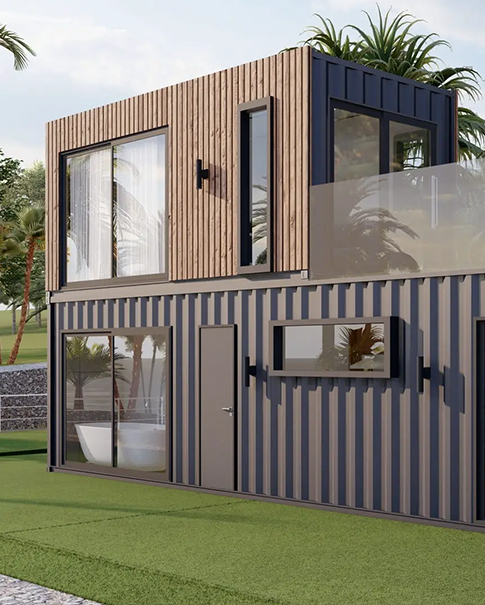
    The global container house boom is rising: innovative architecture leads the future trend A global boom about container houses is spreading rapidly. This unique and innovative architectural form has shown strong vitality and broad development prospects on the international stage. In recent years, container houses have attracted much attention worldwide for their many significant advantages. In the field of architectural design, container houses show extremely high flexibility and creativity. For example, in California, USA, a container hotel called "Geneseo Inn" is like a bright pearl inlaid in a 145-acre vineyard. The hotel is carefully constructed from several containers. Each container module is cleverly elevated above the ground and has an independent outdoor platform. Its interior is designed in a modern and simple style. The 12-foot-high skylight not only achieves natural ventilation, but also introduces sufficient natural light, creating a comfortable and pleasant living environment for travelers. In Xinzhuang Fengtai District, Beijing, China, an 80-square-meter gallery space made of containers is unique, with a simple and charming appearance of white, gray and yellow. The 12-meter-long volume inside is like a tunnel. The pure white interior design features vertical beams and slits on the south wall, which together create a wonderful world of light and shadow, making it a great place for art lovers. From an environmental perspective, the sustainability of container houses is a highlight. They make extensive use of waste containers for transformation, greatly reducing dependence on traditional building materials, effectively reducing energy consumption and environmental pollution. This environmental protection concept is highly consistent with the sustainable development goals advocated by the world, and has therefore won the favor of many environmentalists and consumers. At the same time, the rapid installation characteristics of container houses also provide an ideal solution for various emergencies and temporary needs. In disaster relief scenarios, they can be quickly built to provide timely shelter for the affected people; in some temporary commercial activities or exhibitions, container houses can also be quickly put into use to meet diverse needs. In terms of market application, the market demand for container houses continues to grow, and export business is booming. A well-known container house manufacturing company in my country successfully exported a batch of container houses to Australia. With its flexible and changeable design, environmental protection and energy-saving characteristics, the advantages of fast installation and strong and durable quality, this batch of houses has aroused strong repercussions in the Australian market, which not only brought considerable economic benefits to the company, but also promoted the development of my country's container house industry internationally. In addition, with the growing global d...
    - Jul 23, 2025
  • China's greenhouse technology shines on the international stage, and export business ushers in new breakthroughs
    China's greenhouse technology shines on the international stage, and export business ushers in new breakthroughs
    China's greenhouse technology shines on the international stage, and export business ushers in new breakthroughs In recent years, China has made remarkable achievements in the field of greenhouse technology. Its advanced greenhouse technology and equipment are highly favored in the international market, and its export business is booming. With the growing global demand for agricultural modernization and efficient agriculture, China's greenhouse companies are actively expanding the international market. According to the latest data, China's greenhouse exports in [specific month] increased by [specific percentage] year-on-year, and the export destinations covered many countries and regions in Asia, Europe, Africa, etc. In a large agricultural park in [specific country], greenhouses imported from China are being installed and debugged intensively. These greenhouses use advanced intelligent control systems that can accurately adjust environmental factors such as temperature, humidity and light to provide the best growing conditions for crops. [Name of person in charge], the person in charge of the agricultural park, said: "China's greenhouse technology is very advanced, reliable in quality, and reasonably priced. We believe that these greenhouses will greatly improve our agricultural production efficiency and bring us rich returns." The success of China's greenhouse exports is inseparable from the strong support of the government. The government has introduced a series of policies to encourage agricultural science and technology innovation, increase support for greenhouse research and development and production, and promote the upgrading and development of the greenhouse industry. At the same time, China's greenhouse companies have also continuously strengthened technological innovation and product research and development to improve product quality and competitiveness. For example, [Specific Company Name] recently launched a new type of greenhouse that uses lightweight materials and high-efficiency energy-saving technology, which not only reduces transportation and installation costs, but also greatly reduces energy consumption, and has been widely welcomed by the international market. In addition, China's greenhouse companies are also actively cooperating with international partners to jointly promote the application and promotion of greenhouse technology worldwide. Through technical exchanges, cooperative research and development, and project cooperation, China's greenhouse companies continue to improve their internationalization level and make positive contributions to global agricultural development. Industry experts pointed out that the continued growth of China's greenhouse export business will not only help improve the competitiveness of Chinese agricultural products in the international market, but also inject new impetus into the global agricultural modernization process. In the future, with the continuous development of the global agricult...
    - Jul 16, 2025
1 ... 4 5 6 7 8 9 10

A total of 10 pages

Need Help? Chat with us

Leave A Message
If you are interested in our products and want to know more details,please leave a message here,we will reply you as soon as we can.
Submit

Home

Products

whatsapp

contact