other
  • Prefabricated container expandable houses exported to the Philippines

    Prefabricated container expandable houses exported to the Philippines

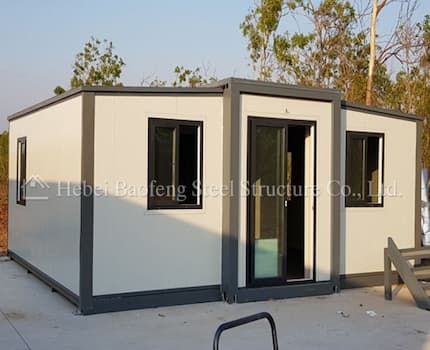
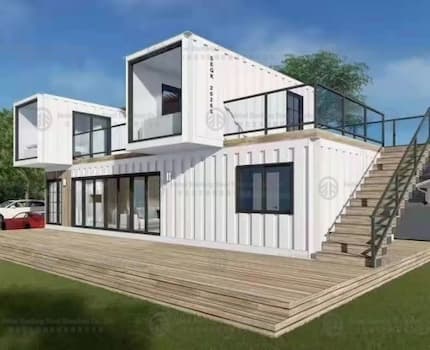
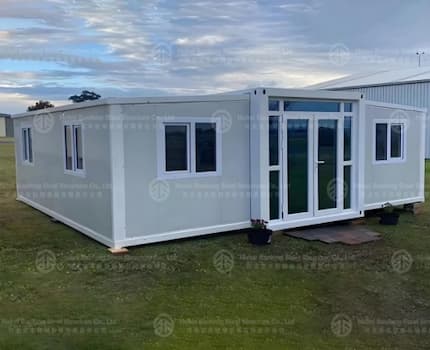
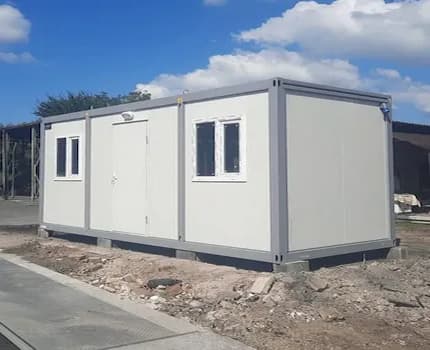
    Prefabricated container expandable houses exported to the Philippines With the continuous advancement of global construction technology and the diversification of market demand, expandable houses, as a convenient and efficient form of construction, have shown strong growth momentum in the international market. The following are two representative cases of expandable houses exported abroad, aiming to provide reference and reference for related industries. Basic situation Many Chinese companies have successfully exported a large number of prefabricated container expandable houses to the Philippines through e-commerce platforms such as Alibaba. These houses are based on containers and have been carefully designed and transformed to have multiple functions such as residences, hotels, offices, and schools. Export motivation and strategy Located in the tropics, the Philippines is prone to frequent natural disasters, and there is a great demand for quickly built temporary housing and disaster relief facilities. Chinese companies have quickly occupied the Philippine market by taking advantage of the mobility, scalability and rapid installation of prefabricated container houses. At the same time, marketing costs have been reduced and market response speed has been improved through e-commerce platforms. Export process and challenges In the process of exporting to the Philippines, the main challenges that Chinese companies need to overcome include adapting to local building codes, ensuring that product quality meets international standards, and providing timely logistics and installation services. To this end, relevant enterprises have strengthened communication with the Philippine government and customers, carried out strict quality inspections on products, and established a complete logistics and after-sales service network. Achievements and Impacts The export of prefabricated container expandable houses not only provides a large number of high-quality housing resources for the Philippines, but also promotes the internationalization of Chinese construction products. Philippine customers highly recognize the convenience, economy and environmental protection of these houses, which further promotes the cooperation and exchanges between China and the Philippines in the field of construction. Summary and Inspiration The above two cases show that expanded houses have broad application prospects and development potential in the international market. Chinese companies have successfully exported expanded houses to many countries and regions through technological innovation, market insights and high-quality services. In the future, with the continuous changes in the global construction market and the continuous advancement of technology, the export of expanded houses will face more opportunities and challenges. Relevant enterprises need to continue to strengthen their technology research and development and market development capabilities, and continuously improve ...
  • China's container houses are exported to Qatar World Cup

    China's container houses are exported to Qatar World Cup

    China's container houses are exported to Qatar World Cup The Qatar World Cup is about to officially start. It is understood that during the event, more than 1 million World Cup tourists will come one after another, pouring into this country with a permanent population of only 3 million. To be more specific, it is actually pouring into the city of Doha. Obviously, such a large number has exceeded the original reception capacity. But visitors are guests, how to let tourists have a warm and comfortable place to stay here, the Qatar World Cup Organizing Committee has also taken great pains for this - using tents, wooden houses or container houses to build a "fan village" near the stadium or transportation hub is one of the important measures. This fan village is 6.2km away from the airport and is transformed from a container. Each room can accommodate two adults. The facilities in the fan village include restaurants, public entertainment areas and viewing areas. On the official website of the World Cup, you can check the booking information of this "fan village" built by containers. It is about 6.2 kilometers away from the airport and within 10 kilometers from the stadium. The nearby subway station is within walking distance. Each room can accommodate two people, and the price is 207 US dollars per day, which is about 1,500 yuan. It is reported that this is also a relatively cheap accommodation method that fans can obtain from official channels during the Qatar World Cup. Qatar launched a "fan village" hotel built with 6,000 container houses near the airport, which has attracted a lot of attention and discussion. And these container houses are from a large number of Chinese companies.
  • Expanding housing exports to New Zealand

    Expanding housing exports to New Zealand

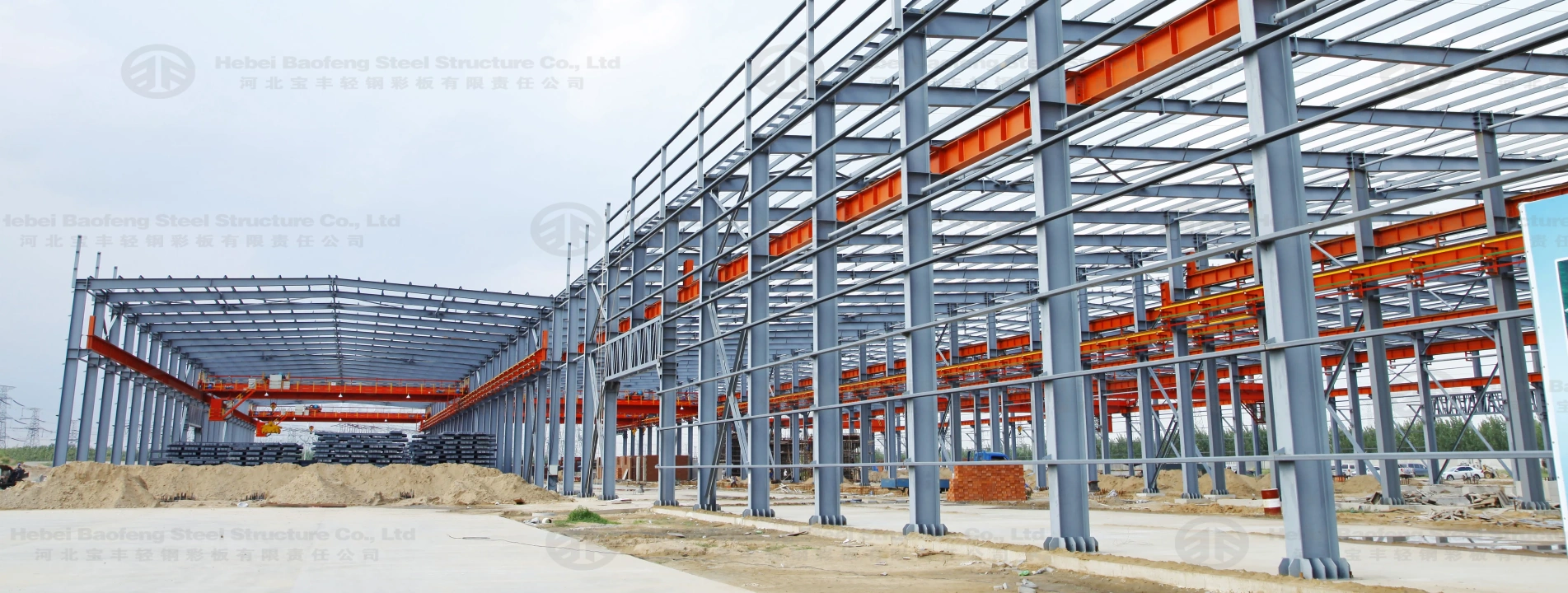
    Expanding housing exports to New Zealand I. Background introduction Our company was established in 2005 and focuses on the research, development, production and sales of steel structure buildings and modular houses. New Zealand has become the preferred target market for Company A due to its stable economic environment, high recognition of environmentally friendly buildings, and growing population and housing demand. II. Market research and preliminary preparation Before entering the New Zealand market, Company A conducted a detailed market research. They found that the New Zealand government has clear policy support for environmentally friendly and energy-saving buildings, and modular houses are in line with this trend due to their high efficiency, environmental protection and customizability. In addition, through communication with local builders and developers, our company learned that there is a strong demand for high-quality and fast-delivered housing in the market. Based on this information, our company has developed a detailed market entry strategy, including: 1. Product customization: Improve and optimize existing products according to New Zealand's building standards and customer needs. 2. Partner selection: Find local strong builders and distributors, establish cooperative relationships, and jointly develop the market. 3. Brand promotion: Enhance brand awareness by participating in international building exhibitions and holding product launches. 3. Implementation phase 1. Product certification and compliance Our company first ensures that its products comply with New Zealand's building regulations and safety standards. They invested a lot of resources in product improvement and passed the strict certification of the New Zealand Building Authority. Although this process is time-consuming and labor-intensive, it has laid a solid foundation for subsequent market promotion. 2. Establishing partnerships By cooperating with well-known local builders, our company quickly gained a foothold in the New Zealand market. This cooperation model fully utilizes the advantages of both parties, achieves resource sharing and mutual benefit. 3. Brand promotion and marketing Our company actively participates in architectural exhibitions in New Zealand and internationally to showcase the unique advantages of its products. At the same time, they also cooperate with local media to enhance brand awareness through news reports and advertising. In addition, our company also uses social media platforms to interact with potential customers and enhance brand influence. 4. Customer service and after-sales support In order to win the trust of customers, our company has established a complete customer service system. They provide a full range of services from design consultation, product installation to after-sales maintenance to ensure that customers have no worries during use. This kind of caring service has won the reputation of customers and brought more repeat cust...
  • Successful case of greenhouse breeding sheds exported to the Netherlands

    Successful case of greenhouse breeding sheds exported to the Netherlands

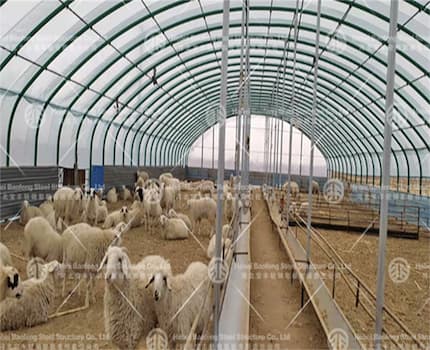
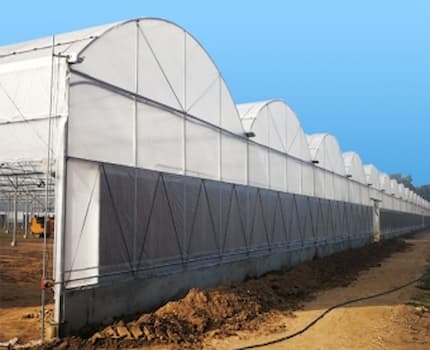
    Successful case of greenhouse breeding sheds exported to the Netherlands With the growing global demand for efficient and environmentally friendly agricultural facilities, China's greenhouse breeding shed technology has gradually emerged in the international market. In early 2024, our company signed a cooperation agreement with a Dutch agricultural company to provide it with customized greenhouse breeding sheds. This project not only marks the successful entry of Yida Agriculture into the high-end European market, but also demonstrates the international competitiveness of China's greenhouse technology. The following are several key success factors of the project: 1. Advanced technology and high quality standards Our company's greenhouse breeding shed adopts a highly automated production method and is equipped with high-tech facilities such as computer climate control systems and automatic fertilization and irrigation monitoring systems. These technologies can accurately control the growth environment such as temperature, humidity, and light in the greenhouse, greatly improving the yield and quality of crops. In addition, Yida Agriculture strictly produces in accordance with international standards to ensure that each greenhouse has excellent weather resistance and long service life, thus winning the trust of foreign customers. 2. Customized design and flexible solutions Dutch customers have special requirements for greenhouse breeding sheds, which need to be able to adapt to the planting needs of a variety of crops. According to the specific needs of customers, our company's design team provides customized design solutions, including greenhouse structure, material selection, environmental control system, etc. This flexible design capability enables Yida Agriculture to meet the diverse needs of customers in different countries and regions, and enhances its competitiveness in the international market. 3. Perfect service system Our company also provides a full range of service support, including installation guidance, technical training, after-sales maintenance, etc. During the project execution, our company sent a professional technical team to the Netherlands to assist customers in the installation and commissioning of the greenhouse to ensure the smooth operation of the project. In addition, our company has also established a perfect after-sales service system to provide customers with timely technical support and maintenance services, solving customers' worries. 4. Environmental protection and sustainable development Our company's greenhouse breeding shed focuses on environmental protection and sustainable development in design, and adopts energy-saving materials and renewable energy systems such as solar power generation and rainwater recycling systems. This not only reduces the operating cost of the greenhouse, but also meets the requirements of the international community for environmental protection and sustainable development, and enhances ...
  • Container House Export to Brighton, UK

    Container House Export to Brighton, UK

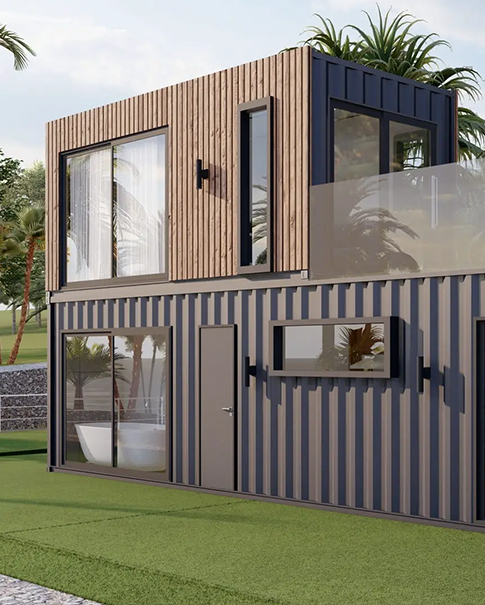
    Container House Export to Brighton, UK As the global housing problem becomes increasingly serious, innovative housing solutions have become particularly important. As a fast, economical and environmentally friendly form of housing, container houses have emerged in the international market in recent years. This article will take the container house project in Brighton, UK as an example to explore its successful application in solving the housing crisis. In 2024, the city of Brighton, UK, faces a serious housing shortage, especially the sharp increase in the number of homeless people. In response to this challenge, the Brighton Housing Trust decided to introduce container houses as temporary residences to alleviate local housing pressure. 36 customized container houses were imported from our company, which are not only uniquely designed, but also highly practical and comfortable. The design of the container house fully reflects the combination of functionality and aesthetics. Each housing unit is composed of two 40-foot-long shipping containers, including a bedroom, a bathroom, and an open kitchen and living area. The exterior wall of the container is decorated with wooden siding, which is both beautiful and environmentally friendly, and complements the surrounding community environment. In addition, each housing unit is equipped with modern living facilities such as kitchen appliances, air conditioning and heating systems to ensure that the residents live comfortably and conveniently. During the construction process, the advantages of container houses are particularly significant. These houses adopt prefabricated structures, and it only takes a few weeks from production to installation, which greatly shortens the construction period. Compared with traditional buildings, container houses have lower construction costs, and due to the high strength characteristics of the containers themselves, these houses can withstand the changing weather conditions in the UK and have a long service life. In addition, the environmental protection characteristics of container houses are also in line with the UK government's sustainable development policy, reducing the consumption of natural resources and the generation of construction waste. As soon as the Brighton container house project was launched, it received widespread attention and praise from all walks of life. The homeless found safety and warmth in these temporary homes, and the local government also effectively alleviated the housing crisis through this project. In addition, the project also provided valuable experience for the promotion and application of container houses in other cities and regions. For example, some communities in London have also begun to introduce similar container house projects as an effective means to solve the housing shortage problem. From a business perspective, this project also brought cooperation opportunities for Chinese and British companies. Through this project, Chinese ...
  • Expanding housing exports to Uganda

    Expanding housing exports to Uganda

    Expanding housing exports to Uganda In the wave of globalized trade, China's manufacturing industry continues to demonstrate strong international competitiveness. Hebei Baofeng Light Steel Color Plate Co., Ltd., with its innovative modular integrated housing technology, has successfully introduced prefabricated houses to the Ugandan market, setting an example for expanding housing exports. Modular integrated houses, commonly known as "prefabricated houses", are a type of construction method that uses advanced technology to prefabricate in factories and then transport them to the site for assembly. At the beginning of 2024, our company received the first batch of orders for export to Uganda. This batch of 10 integrated houses was carefully hoisted onto trucks and shipped to Tianjin Port, and then shipped to Africa by sea. These integrated houses are not only beautiful in appearance, but also full of technological content. The thickened galvanized steel coils and fireproof cotton technology used by the company are in a leading position in the industry, can achieve Class A fire protection, and the seismic resistance level has reached Class VIII, providing Ugandan customers with safe and reliable housing options. The application field of integrated houses is very wide, not only suitable for temporary buildings on construction sites, but also can be used in scenic spots, camping bases and municipal facilities in cities. In Uganda, these integrated houses will be used in local construction projects to provide local residents with a comfortable and safe living environment. The success of this project lies not only in its advanced technology and high-quality products, but also in the company's keen insight into and active expansion of the international market. The Uganda project not only brought advanced construction technology and high-quality products to the local area, but also provided valuable experience for Chinese companies to expand overseas markets. This case fully demonstrates the strength and potential of China's manufacturing industry in the process of globalization, and also provides a useful reference for other companies to expand overseas markets. With the continuous advancement of technology and the deepening of international cooperation, I believe that more and more "Made in China" will go to the world and make greater contributions to global economic development.
  • Successful case of greenhouse export to Cambodia

    Successful case of greenhouse export to Cambodia

    Successful case of greenhouse export to Cambodia Against the background of the continuous development of global trade, a Chinese agricultural technology company successfully exported greenhouses to Cambodia, injecting new vitality into the modernization of local agriculture. The following is a detailed case introduction of the project: Project background Cambodia is located in Southeast Asia, with climatic conditions suitable for agricultural development, but due to relatively weak infrastructure, traditional agricultural methods are inefficient. After learning about the needs of Cambodia's agricultural development, a Chinese agricultural technology company decided to introduce advanced greenhouse technology into the country to improve agricultural production efficiency and agricultural product quality. Project preparation 1. Market research: The company first conducted an in-depth investigation of Cambodia's agricultural market to understand the local climatic conditions, soil characteristics, planting habits and market demand. Through the investigation, the types of greenhouses and supporting facilities suitable for local conditions were determined. 2. Technical customization: According to the results of the investigation, the company customized the technology of the greenhouse, including the selection of high temperature and corrosion resistant materials, the design of reasonable ventilation and irrigation systems, and the installation of intelligent temperature control equipment to adapt to the climate characteristics of Cambodia. 3. Cooperation negotiation: The company conducted extensive cooperation negotiations with the local government and agricultural enterprises in Cambodia, and reached a number of cooperation agreements to ensure the smooth progress of the project. Project Implementation 1. Equipment Production and Transportation: At the domestic production base, the company completed the production of greenhouses according to high standards and ensured that all equipment met export requirements. Subsequently, the equipment was safely shipped to Cambodia by sea. 2. On-site installation and commissioning: The company sent a professional technical team to Cambodia for on-site installation and commissioning. The technical team not only ensured the smooth construction of the greenhouse, but also provided operation training to local farmers to ensure that they could skillfully use and maintain the equipment. 3. Technical Support and After-sales Service: In order to ensure the long-term success of the project, the company provided continuous technical support and after-sales service, including regular return visits, equipment maintenance and technology upgrades. Project Results 1. Significantly improved agricultural production efficiency: The commissioning of greenhouses has made Cambodia's agricultural production no longer restricted by seasons and achieved year-round planting. At the same time, the application of intelligent temperature co...
  • Successful case of greenhouse export to the Philippines

    Successful case of greenhouse export to the Philippines

    Successful case of greenhouse export to the Philippines Against the background of the continuous development of global trade, our company successfully exported the independently developed greenhouse to the Philippines, injecting new impetus into the local agricultural modernization process. The following are the details of the case: Project background As a major agricultural country, the Philippines faces huge challenges in traditional agricultural production mode due to climate change and frequent natural disasters. In order to improve agricultural production efficiency and ensure food security, the Philippine government actively seeks to introduce advanced agricultural technology. With rich export experience and technical advantages in the field of greenhouses, our company successfully reached a cooperation with an agricultural enterprise in the Philippines. Project preparation 1. Market research: In-depth study of the Philippine market, understanding of local climate conditions, soil characteristics, planting habits and policies and regulations, and providing a basis for subsequent product customization and market promotion. 2. Product customization: According to the climate characteristics of the Philippines, our company has carried out targeted design of greenhouses. High temperature resistant and corrosion-resistant materials are used to ensure the stability and service life of the greenhouse in tropical climates. At the same time, it is equipped with intelligent irrigation, ventilation and temperature control systems to achieve precision agricultural management. Project results 1. Increase yield: After the greenhouse was put into use, it effectively solved the problem that traditional agriculture in the Philippines was greatly affected by the weather. Through the intelligent management system, precise control of environmental factors such as temperature, humidity, and light was achieved, greatly improving the yield and quality of crops. 2. Increase income: Using greenhouses to grow high-value-added vegetables and fruits not only meets local market demand, but also successfully exports to neighboring countries, bringing considerable economic benefits to the company. 3. Establish a brand: With high-quality products and services, our company has established a good brand image in the Philippine market, laying a solid foundation for the subsequent business expansion. Experience summary 1. In-depth understanding of market demand: In the export business, it is crucial to have a deep understanding of the needs and characteristics of the target market. Only by customizing products according to market demand can we better meet customer needs. 2. Focus on product quality and service: High-quality products and services are the key to winning the market. During the implementation of the project, Company A always focused on product quality and after-sales service, winning the trust and praise of customers. 3. Strengthen international cooperation: Throug...
1 ... 5 6 7 8

A total of 8 pages

Need Help? Chat with us

Leave A Message
If you are interested in our products and want to know more details,please leave a message here,we will reply you as soon as we can.
Submit

Home

Products

whatsapp

contact